Performance Analysis of Machine Learning Methods for Classifying Types of Dry Beans
DOI:
https://doi.org/10.58190/imiens.2026.174Keywords:
Dry beans, Classification, Machine learning, Artificial Neural Networks, OptimizationAbstract
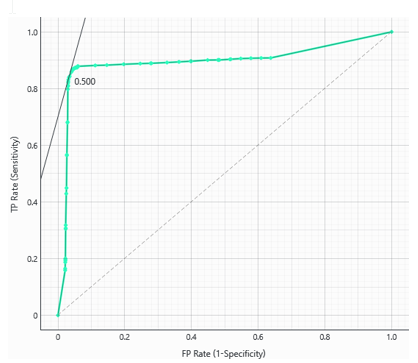
Dry beans are a staple food of strategic importance worldwide and in our country due to their high protein content and nutritional value. In agricultural production, preserving seed quality and ensuring product standardization play a critical role in food safety and commercial sustainability. In this context, the accurate and rapid differentiation of morphologically similar bean varieties is essential for maintaining product purity. The main objective of this study is to enable the automatic and highly accurate classification of seven different dry bean varieties registered in Turkey using modern artificial intelligence technologies. Unlike traditional methods, the goal is to develop a decision support system that minimizes human-induced classification errors arising from physical similarities. The study utilized the Dry Bean Dataset obtained from open-source platforms. The dataset includes 16 different numerical morphological and shape features such as Area, Perimeter, Principal Axis Length, and Eccentricity, along with 7 different target classes: Seker, Barbunya, Bombay, Bush, Dermason, Horoz, and Sira. Decision Tree, Random Forest, Logistic Regression, and Artificial Neural Networks algorithms were used to solve the classification problem and perform performance analysis. As a result of the experimental analyses conducted, the highest classification success was achieved with the Artificial Neural Networks model, with a general accuracy rate of 93.4% and an AUC value of 0.995. In contrast, the lowest performance was observed in the Decision Tree algorithm, with an accuracy rate of 90.6%. This developed system has the potential to automate quality control processes in the food industry, thereby reducing manual sorting costs and increasing processing speed. Furthermore, it can provide industrial benefits as a reliable digital tool in seed certification processes and in verifying the purity of commercial products.
Downloads
References
[1] G. Słowiński, “Dry beans classification using machine learning,” in Proc. 29th Int. Workshop Concurrency, Specification and Programming (CS&P 2021), Berlin, Germany, 2021, CEUR Workshop Proc., vol. 2951, pp. 166–173.
[2] Y. S. Taspinar, M. Dogan, I. Cinar, R. Kursun, I. A. Ozkan, and M. Koklu, “Computer vision classification of dry beans (Phaseolus vulgaris L.) based on deep transfer learning techniques,” European Food Research and Technology, vol. 248, no. 11, pp. 2707–2725, 2022, doi: 10.1007/s00217-022-04080-1.
[3] C. H. Mendigoria et al., “Seed architectural phenes prediction and variety classification of dry beans (Phaseolus vulgaris) using machine learning algorithms,” in Proc. 2021 IEEE 9th Region 10 Humanitarian Technology Conf. (R10-HTC), Bangalore, India, 2021, pp. 1–6, doi: 10.1109/R10-HTC53172.2021.9641554.
[4] S. Krishnan, S. K. Aruna, K. Kanagarathinam, and E. Venugopal, “Identification of dry bean varieties based on multiple attributes using CatBoost machine learning algorithm,” Scientific Programming, vol. 2023, Art. no. 2556066, 2023, doi: 10.1155/2023/2556066.
[5] M. S. Khan et al., “Comparison of multiclass classification techniques using dry bean dataset,” International Journal of Cognitive Computing in Engineering, vol. 4, pp. 6–20, 2023, doi: 10.1016/j.ijcce.2023.01.002.
[6] M. Dogan, Y. S. Taspinar, I. Cinar, R. Kursun, I. A. Ozkan, and M. Koklu, “Dry bean cultivars classification using deep CNN features and salp swarm algorithm based extreme learning machine,” Computers and Electronics in Agriculture, vol. 204, Art. no. 107575, 2023, doi: 10.1016/j.compag.2022.107575.
[7] J. C. Macuácua, J. A. S. Centeno, and C. Amisse, “Data mining approach for dry bean seeds classification,” Smart Agricultural Technology, vol. 5, Art. no. 100240, 2023, doi: 10.1016/j.atech.2023.100240.
[8] A. Mehta, P. Sengupta, D. Garg, H. Singh, and Y. Shacham-Diamand, “Benchmarking the effectiveness of classification algorithms and SVM kernels for dry beans,” arXiv preprint arXiv:2307.07863, 2023, doi: 10.48550/arXiv.2307.07863.
[9] J. Nayak, P. B. Dash, and B. Naik, “An advance boosting approach for multiclass dry bean classification,” Journal of Engineering Science and Technology Review, vol. 16, no. 2, pp. 107–115, 2023, doi: 10.25103/jestr.162.14.
[10] G. Shobana, S. N. Bushra, K. U. Maheswari, and N. Subramanian, “Multivariate classification of dry beans using pipelined dimensionality reduction technique,” in Proc. 2022 International Conference on Innovative Computing, Intelligent Communication and Smart Electrical Systems (ICSES), Chennai, India, 2022, pp. 1–6, doi: 10.1109/ICSES55317.2022.9914079.
[11] I. F. Rimi, M. T. Habib, S. Supriya, M. A. A. Khan, and S. A. Hossain, “Traditional machine learning and deep learning modeling for legume species recognition,” SN Computer Science, vol. 3, no. 6, Art. no. 430, 2022, doi: 10.1007/s42979-022-01268-w.
[12] H. Vaidya, K. V. Prasad, S. Renuka, and K. Kumar Swamy, “Multiclass classification of dry beans using artificial neural network,” Journal of International Academy of Physical Sciences, vol. 27, no. 2, pp. 109–124, 2023.
[13] M. Koklu and I. A. Ozkan, “Multiclass classification of dry beans using computer vision and machine learning techniques,” Computers and Electronics in Agriculture, vol. 174, Art. no. 105507, 2020, doi: 10.1016/j.compag.2020.105507.
[14] G. Słowiński, “Python machine learning. Dry beans classification case,” Zeszyty Naukowe WWSI, vol. 18, no. 30, pp. 7–26, 2024, doi: 10.26348/znwwsi.30.7.
[15] J. Coronel-Reyes, C. Delgado-Vera, J. Chavez-Urbina, and A. Sinche-Guzmán, “Multiclass classification of dry bean grains using machine learning techniques,” in Technologies and Innovation: CITI 2024, R. Valencia-García et al., Eds. Cham, Switzerland: Springer, 2025, vol. 2276, pp. 16–27, doi: 10.1007/978-3-031-75702-0_2.
[16] “Dry Beans Classifications,” Kaggle. [Online]. Available: https://www.kaggle.com/datasets/whenamancodes/dry-beans-dataset. [Accessed: Aug. 28, 2026].
[17] L. Breiman, J. H. Friedman, R. A. Olshen, and C. J. Stone, Classification and Regression Trees. Boca Raton, FL, USA: Chapman & Hall/CRC, 2017.
[18] J. R. Quinlan, “Induction of decision trees,” Machine Learning, vol. 1, no. 1, pp. 81–106, 1986, doi: 10.1007/BF00116251.
[19] L. Breiman, “Random forests,” Machine Learning, vol. 45, no. 1, pp. 5–32, 2001, doi: 10.1023/A:1010933404324.
[20] L. Breiman, “Bagging predictors,” Machine Learning, vol. 24, no. 2, pp. 123–140, 1996, doi: 10.1007/BF00058655.
[21] D. W. Hosmer Jr., S. Lemeshow, and R. X. Sturdivant, Applied Logistic Regression, 3rd ed. Hoboken, NJ, USA: John Wiley & Sons, 2013, doi: 10.1002/9781118548387.
[22] R. Tibshirani, “Regression shrinkage and selection via the lasso,” Journal of the Royal Statistical Society: Series B (Methodological), vol. 58, no. 1, pp. 267–288, 1996, doi: 10.1111/j.2517-6161.1996.tb02080.x.
[23] A. E. Hoerl and R. W. Kennard, “Ridge regression: Biased estimation for nonorthogonal problems,” Technometrics, vol. 12, no. 1, pp. 55–67, 1970, doi: 10.1080/00401706.1970.10488634.
[24] D. E. Rumelhart, G. E. Hinton, and R. J. Williams, “Learning representations by back-propagating errors,” Nature, vol. 323, no. 6088, pp. 533–536, 1986, doi: 10.1038/323533a0.
[25] N. Srivastava, G. Hinton, A. Krizhevsky, I. Sutskever, and R. Salakhutdinov, “Dropout: A simple way to prevent neural networks from overfitting,” Journal of Machine Learning Research, vol. 15, pp. 1929–1958, 2014.
[26] L. Prechelt, “Early stopping—But when?” in Neural Networks: Tricks of the Trade, G. B. Orr and K.-R. Müller, Eds., Lecture Notes in Computer Science, vol. 1524. Berlin, Germany: Springer, 1998, pp. 55–69, doi: 10.1007/3-540-49430-8_3.
[27] S. V. Stehman, “Selecting and interpreting measures of thematic classification accuracy,” Remote Sensing of Environment, vol. 62, no. 1, pp. 77–89, 1997, doi: 10.1016/S0034-4257(97)00083-7.
[28] M. Sokolova and G. Lapalme, “A systematic analysis of performance measures for classification tasks,” Information Processing & Management, vol. 45, no. 4, pp. 427–437, 2009, doi: 10.1016/j.ipm.2009.03.002.
[29] R. Kohavi, “A study of cross-validation and bootstrap for accuracy estimation and model selection,” in Proc. 14th International Joint Conference on Artificial Intelligence (IJCAI), 1995, pp. 1137–1145.
Downloads
Published
Issue
Section
License
Copyright (c) 2026 Intelligent Methods In Engineering Sciences

This work is licensed under a Creative Commons Attribution-ShareAlike 4.0 International License.
How to Cite