
ISSN: 2979-9236|DOI: 10.58190/imiens|Open Access|Peer-Reviewed
Intelligent Methods In Engineering Sciences
Volume 5 • Issue 2 (2026) Published

Intelligent Methods In Engineering Sciences

Welcome to Intelligent Methods in Engineering Sciences (IMIENS)

IMIENS is an international, interdisciplinary, peer-reviewed journal dedicated to advancing intelligent systems and applications across all fields of engineering. Our mission is to bridge the gap between theory and practice, fostering innovations in diverse areas such as nanotechnology, renewable energy, biomedical engineering, robotics, aerospace, industrial manufacturing, and more.

As an Open Access Journal, IMIENS ensures global accessibility to all published articles without subscription fees. This commitment accelerates the dissemination of knowledge and enhances the visibility and impact of your research.

  • ISSN: 2979-9236
  • DOI: 58190/imiens
  • Explore our articles on Google Scholar.

Join us in shaping the future of intelligent systems in engineering.

e-ISSN: 2979-9236DOI: 10.58190/imiensOpen Access (CC BY-SA 4.0)No APC ($0)
Latest Issue
Vol. 5 (2026)
Volume 5, Issue 2

3 Research Articles

Published: Aug 30, 2026

lock_openOpen Access
CC BY-SA 4.0
Free for authors (No APC)
verified_userPeer Review
Double-Anonymous Peer Review
Rigorous double-blind evaluation
tagJournal DOI
10.58190/imiens
Persistent digital object identifier
databasePreservation
LOCKSS + CLOCKSS
Long-term digital archiving
Current Issue

Volume 5, Issue 2 (2026)

Published: August 30, 20263 Research Articles

tocView Full Issue

The Intelligent Methods in Engineering Sciences (Vol. 5, No. 2, 2026) presents a collection of research studies demonstrating the application of machine learning, deep learning, and data-driven analysis methods to agricultural, industrial, and supply chain problems. This issue features a comparative performance analysis of machine learning algorithms for the classification of dry bean varieties, an experimental evaluation of YOLO12 and YOLO13 models for detecting surface defects in steel materials, and a machine learning-based approach for predicting processing times and delays across different operational stages of supply chains. Together, these contributions highlight the potential of intelligent methods to improve classification accuracy, quality control processes, operational planning, and decision-making in real-world engineering and industrial applications.

articleArticles
3
verifiedPeer Review
Double-Anonymous Peer Review
lock_openAccess Model
Open Access (CC BY-SA)
Peer-Reviewed Content

Articles in Current Issue

Research ArticlesReview Articles
Performance Analysis of Machine Learning Methods for Classifying Types of Dry Beans
Research Articleslock_openOpen Access
pp. 49-54

Performance Analysis of Machine Learning Methods for Classifying Types of Dry Beans

Hasan Selim SındırYavuz Selim Taspinar

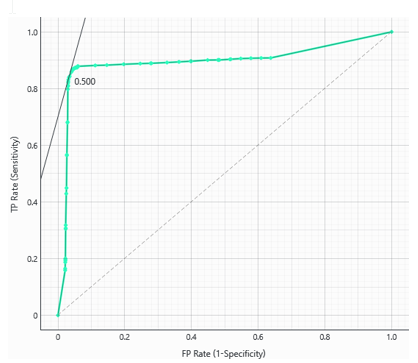
Dry beans are a staple food of strategic importance worldwide and in our country due to their high protein content and nutritional value. In agricultural production, preserving seed quality and ensuring product standardization play a critical role in food safety and commercial sustainability. In this context, the accurate and rapid differentiation of morphologically similar bean varieties is essential for maintaining product purity. The main objective of this study is to enable the automatic and highly accurate classification of seven different dry bean varieties registered in Turkey using modern artificial intelligence technologies. Unlike traditional methods, the goal is to develop a decision support system that minimizes human-induced classification errors arising from physical similarities. The study utilized the Dry Bean Dataset obtained from open-source platforms. The dataset includes 16 different numerical morphological and shape features such as Area, Perimeter, Principal Axis Length, and Eccentricity, along with 7 different target classes: Seker, Barbunya, Bombay, Bush, Dermason, Horoz, and Sira. Decision Tree, Random Forest, Logistic Regression, and Artificial Neural Networks algorithms were used to solve the classification problem and perform performance analysis. As a result of the experimental analyses conducted, the highest classification success was achieved with the Artificial Neural Networks model, with a general accuracy rate of 93.4% and an AUC value of 0.995. In contrast, the lowest performance was observed in the Decision Tree algorithm, with an accuracy rate of 90.6%. This developed system has the potential to automate quality control processes in the food industry, thereby reducing manual sorting costs and increasing processing speed. Furthermore, it can provide industrial benefits as a reliable digital tool in seed certification processes and in verifying the purity of commercial products.
visibility34file_download9
YOLO12 and YOLO13 for Steel Surface Defect Detection: Experimental Evaluation
Research Articleslock_openOpen Access
pp. 55-68

YOLO12 and YOLO13 for Steel Surface Defect Detection: Experimental Evaluation

Adem Dilbaz

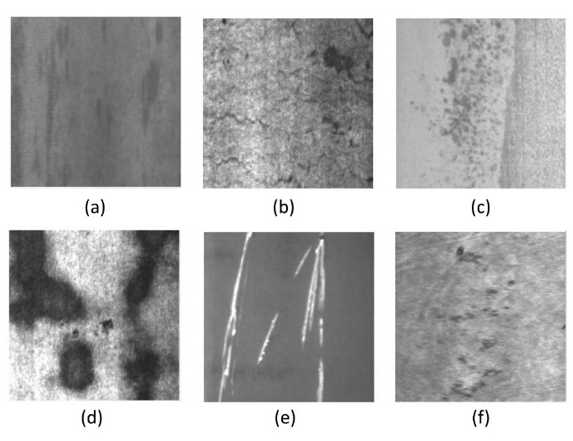
Intelligent inspection and defect detection of steel surfaces are essential for ensuring product quality, minimizing production losses, and supporting quality control in modern manufacturing systems. In particular, the identification of defects on steel plates is an important step, as surface imperfections can significantly affect the mechanical performance and commercial value of the final product. This study presents a comparative evaluation of YOLO12 and YOLO13 architectures for steel surface defect detection using the NEU-DET dataset under different validation ratios and input image resolutions. Four models (YOLO12-S, YOLO12-L, YOLO13-S, and YOLO13-L) were evaluated under three experimental settings using standard object detection metrics and three different random seeds. Experimental results showed that YOLO13-S consistently demonstrated superior overall detection performance, reaching a best single-run mAP@50 value of 0.753 with seed 42 and a precision value of 0.848 with seed 44. In addition, it achieved the highest single-run mAP@50–95 value of 0.449, with seed 43. In contrast, YOLO12-L achieved the highest single-run recall (0.749), with seed 42, indicating its stronger capability for detecting positive defect instances. Overall, the results demonstrate that YOLO13-S provides the best balance between detection accuracy and computational efficiency, while YOLO12-L offers superior recall performance under the evaluated conditions.

visibility39file_download9
Data-Driven Prediction of Processing Times and Delays Across Supply Chain Operational Stages Using Machine Learning
Research Articleslock_openOpen Access
pp. 69-82

Data-Driven Prediction of Processing Times and Delays Across Supply Chain Operational Stages Using Machine Learning

Muhammed Yildiray SURMENOya KILCISelime Sinem BAHARMurat KOKLU

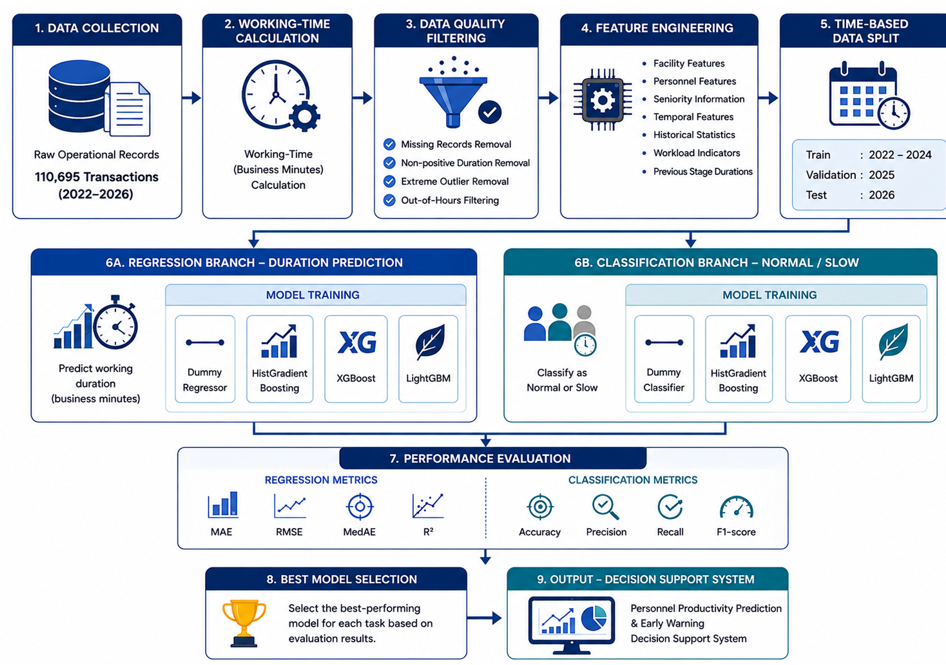
This study proposes an ensemble learning framework to predict personnel data entry durations across six operational stages using transaction records collected from an operational supply chain information system. To accurately represent operational performance, processing times were calculated in working minutes by excluding nonworking periods, including nights and weekends. The dataset comprised 110,695 unique shipment records collected between 2022 and 2026 and underwent stage-specific data quality assessment and preprocessing. A median-based baseline predictor and three ensemble learning algorithms, HistGradientBoosting, XGBoost, and LightGBM, were evaluated for regression tasks. All models were trained on a log-transformed target (log1p), and predictions were back-transformed to working minutes using the inverse transformation (expm1). To prevent data leakage and better reflect real-world deployment, a year-based temporal split was adopted, with 2026 records reserved for testing. Model performance was evaluated using mean absolute error, root mean square error, coefficient of determination, accuracy, precision, recall, and F1-score. A single regression model was trained per stage, and binary labels (normal/slow) were derived by thresholding the predicted durations at a stage-specific cut-off optimized on the validation set. The results showed that predictive performance varied substantially across operational stages, with LightGBM achieving the best overall performance for the Loading Arrival stage, while lower performance in the Transport Entry and unloading stages suggested the influence of external operational factors not represented in the available data. For the Loading Arrival stage, LightGBM achieved an MAE of 285.989 working minutes and an R² of 0.371 on the test set. Overall, the findings demonstrate that ensemble learning provides an effective and computationally efficient approach for predicting personnel data entry durations and supports real-time decision-making, personnel performance monitoring, and process optimization in data-driven supply chain operations.

visibility37file_download17
Scholarly Communication

Journal Announcements

View All Announcementschevron_right
Announcement

IMIENS Indexed in ICI Journals Master List for 2024

We wish to inform our readers, authors, and editors that the journal, "Intelligent Methods In Engineering Sciences" (ISSN: 2979-9236), has passed the evaluation process for the Index Copernicus International (ICI) Journals Master List and is now indexed for the year 2024.

Following a parametric evaluation of the journal's operations in 2024, an Index Copernicus Value (ICV) of 100.00 has been assigned.

We acknowledge the contributions of our authors, reviewers, and the editorial board in maintaining the standards required for this achievement.

Sincerely, The Editorial Board

Announcement

IMIENS is Now Indexed in Scilit!

The Intelligent Methods In Engineering Sciences (IMIENS) is pleased to announce that it has been indexed in Scilit, a comprehensive database for scientific literature.

campaignCall for Papers

Have Original Research to Share?

Intelligent Methods In Engineering Sciences welcomes original research articles across engineering disciplines, computational methods, and intelligent systems.

No Article Processing Charges (APC: $0) CrossRef DOI for Every Paper OAI-PMH Metadata Harvesting