ISSN: 2979-9236|DOI: 10.58190/imiens|Open Access|Peer-Reviewed
Intelligent Methods In Engineering Sciences
Vol. 5 • Issue 14 Published Articles

Volume 5, Issue 1 (2026)

Published: April 29, 2026

The Intelligent Methods in Engineering Sciences (Vol. 5, No. 1, 2026) presents a collection of innovative studies demonstrating the growing impact of intelligent systems and machine learning techniques across engineering and healthcare applications. This issue features research on deep learning and image processing approaches for plant disease detection, breast cancer diagnosis using ensemble-based machine learning methods, skin lesion classification through deep feature extraction with SqueezeNet architectures, and hybrid financial prediction models integrating deep learning with worst Omega optimization. Together, these contributions emphasize the effectiveness of artificial intelligence and computational intelligence methods in solving complex classification, prediction, and decision-making problems in real-world domains.


Table of Contents (4 Articles)

Full Text & Open Access
Plant Disease Detection and Classification Using Deep Learning and Image Processing
Research Articleslock_openOpen Access
pp. 1-9

Plant Disease Detection and Classification Using Deep Learning and Image Processing

Oguzhan BASPINARAli YASARYavuz Selim TASPINAR

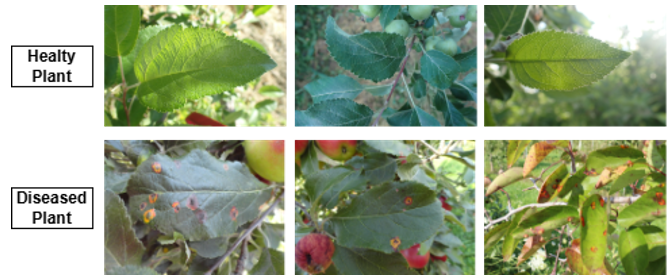
In agriculture, plants play a vital role in sustaining both human life and the ecosystem. However, plant diseases significantly affect crop yield and quality, making early detection essential. In this study, a dataset consisting of 458 healthy and 435 diseased plant leaf images was used for classification. SqueezeNet and InceptionV3 deep learning architectures were employed for feature extraction, and machine learning models including Artificial Neural Network (ANN), K-Nearest Neighbors (KNN), Support Vector Machine (SVM) and Logistic Regression (LR) were used for classification. Model performance was evaluated using accuracy, precision, recall, F1-score, and confusion matrix metrics. The experimental results show that the InceptionV3-based models achieved higher classification performance compared to SqueezeNet with the LR classifier providing the best overall accuracy of 98.48%. This study provides a comprehensive comparison of deep learning architectures combined with traditional machine learning classifiers and demonstrates the effectiveness of hybrid approaches for plant disease detection. The findings contribute to the development of accurate and efficient systems for early plant disease diagnosis.

visibility685file_download303
Cancer Detection in Breast Histopathological Images Using Extremely Randomized Trees
Research Articleslock_openOpen Access
pp. 10-19

Cancer Detection in Breast Histopathological Images Using Extremely Randomized Trees

Mahendra Kanojia

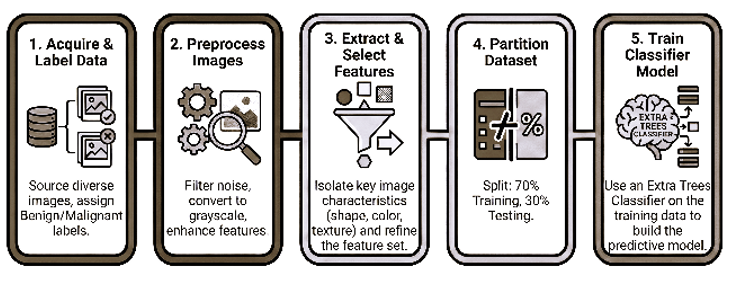
This research aimed to develop an effective machine learning-based system for the automated detection of breast cancer using histopathological images, overcoming the limitations of manual examination. The study utilized a diverse dataset of 13,347 histopathological images from three secondary sources and one primary source. The inclusion of multiple image sources was intended to enhance the model’s versatility. Initially, images underwent pre-processing to reduce noise using a median filter and were converted to grayscale. Otsu's thresholding was then applied to enhance nucleus edges and reduce background noise. A recursive feature elimination algorithm was employed to reduce the initial 98 features to these 48 key ones, focusing on the area and shape of the nucleus, color-based features, and image texture. For classification, the Extremely Randomized Trees Classifier was used. The model was trained to classify images as benign or malignant. The results demonstrated high performance, with the model achieving an accuracy of 98.95%. Further evaluation revealed a sensitivity of 99.48%, indicating a low false negative rate. Specificity was 94.67%, correctly identifying benign cases. The model also achieved precision of 98.97% and recall of 99.48%, with a Kappa statistic of 97.62%, suggesting substantial agreement beyond chance. The ROC performance was 98.67%, indicating robust performance. This study highlights the potential of machine learning, specifically the Extremely Randomized Trees Classifier, for automated and accurate breast cancer detection from histopathological images. The high-performance metrics suggest the model can enhance diagnostic accuracy and assist pathologists in clinical decision-making.

visibility435file_download286
Classification of Skin Lesions with Deep Features Based on SqueezeNet Using Machine Learning Methods
Research Articleslock_openOpen Access
pp. 20-30

Classification of Skin Lesions with Deep Features Based on SqueezeNet Using Machine Learning Methods

Samet AkcakayaIlknur Cevik TekinYavuz Selim Taspinar

Early and accurate identification of skin lesions is one of the most important factors that improves treatment success in dermatological diseases. Deep learning and image processing algorithms can provide promising results in diagnostic processes by learning complex texture, pigment, and structural features that are difficult for the human eye to distinguish. In this study, a hybrid classification approach based on deep feature extraction and machine learning is proposed. A total of 1,763 dermoscopic images, including eight lesion classes, selected from the ISIC 2019 skin lesion dataset were used. Deep features were extracted using a pretrained SqueezeNet model and analyzed using a 10-fold cross-validation method. The extracted features were evaluated using Artificial Neural Network (ANN), K-Nearest Neighbor (KNN), Support Vector Machine (SVM), and Logistic Regression (LR) classifiers. Experimental results show that the proposed model achieved accuracy values ranging from 96.7% to 89.6% and F1-score values ranging from 96.6% to 89.5%, successfully classifying skin lesions. The KNN model showed relatively lower discrimination capability compared to the other models. All models achieved 100% accuracy in the BCC (Basal Cell Carcinoma) class, while ANN and LR models also classified the SCC (Squamous Cell Carcinoma) class without error. Among all classes, the lowest performance was observed in the DF (Dermatofibroma) class. This study demonstrates that high classification performance can be achieved in multi-class (8 classes) dermatological analysis using lightweight architectures without requiring computationally heavy deep learning models. However, further validation on larger and more diverse datasets is required before real-world clinical applicability can be considered.

visibility409file_download226
Deep Learning with Softmax and SVM using Worst Omega Optimization for Multi-Class Financial Prediction
Research Articleslock_openOpen Access
pp. 31-45

Deep Learning with Softmax and SVM using Worst Omega Optimization for Multi-Class Financial Prediction

Simrandeep Kaur

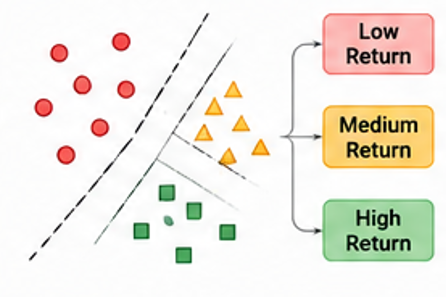
This study proposes a hybrid framework for multi-class financial prediction and portfolio optimization by integrating deep learning-based classification models with worst-case Omega optimization. The framework employs a neural network architecture combined with Softmax and multi-class Support Vector Machine (SVM) classifiers to categorize assets into low-, medium-, and high-return classes. These classifications are subsequently utilized to construct portfolios using a worst-case Omega optimization model that explicitly accounts for downside risk and uncertainty. The empirical analysis is conducted on two benchmark datasets, BSE 30 and DOW 30, using a rolling window approach. The results demonstrate that the SVM-based classification model outperforms the Softmax model in terms of class separability and stability across varying market conditions. Portfolios constructed using SVM-selected assets consistently achieve higher returns, lower volatility, and improved risk-adjusted performance, as evidenced by superior Sharpe, Sortino, STARR, and Omega ratios. Furthermore, the worst-case Omega optimization framework provides enhanced protection against extreme losses by effectively controlling tail risk, as reflected in lower Value-at-Risk (VaR) and Conditional Value-at-Risk (CVaR). Comparative analysis with equally weighted portfolios confirms the ability of the proposed framework to generate persistent excess returns across different risk-aversion levels. Overall, the study highlights the importance of combining accurate classification techniques with robust optimization methods for effective portfolio management. The proposed approach offers a flexible and reliable solution for decision-making in dynamic and uncertain financial markets.

visibility686file_download274